Managing a school is not just about teaching students. Behind every successful school, there is a huge amount of administrative work happening every day — student admissions, attendance, examinations, fees, teacher management, communication, reports, timetables, and much more.
When these activities are managed manually using registers, spreadsheets, paperwork, and multiple disconnected systems, things can quickly become difficult to manage. This is where school management software can make a real difference.
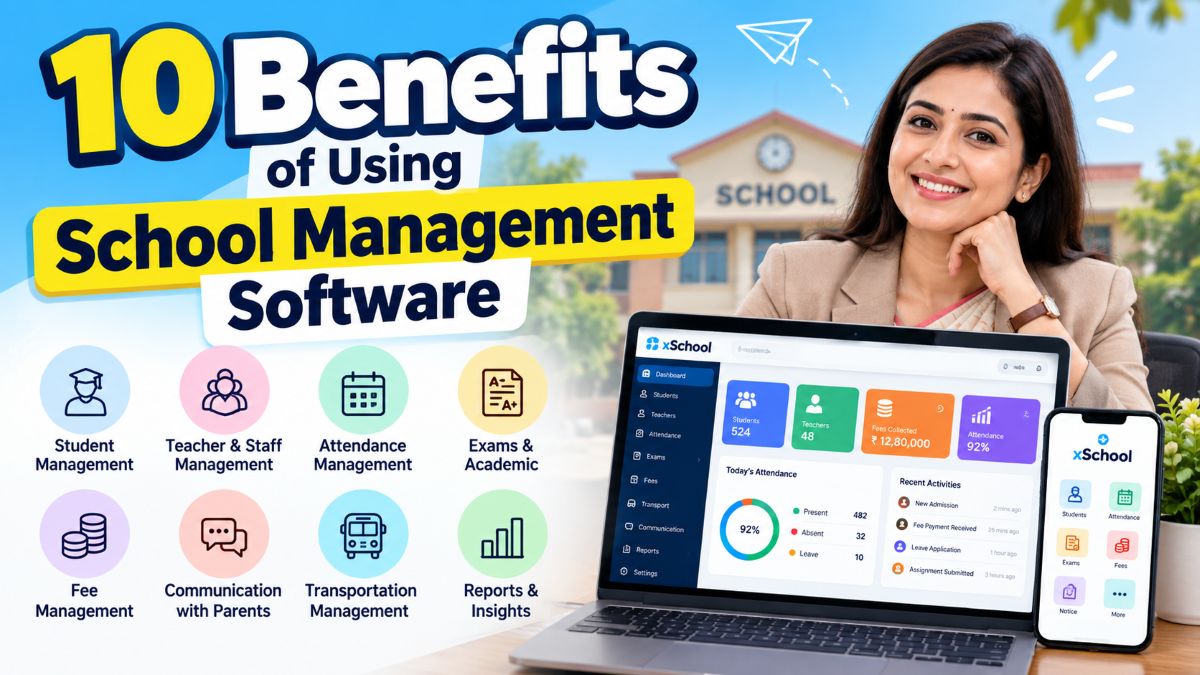
A modern School Management System (SMS) or School ERP software brings different school operations together on a single platform. It helps school administrators, teachers, students, and parents access the information they need while reducing repetitive administrative work.
Here are 10 major benefits of using school management software in a school.
1. Reduces Administrative Work
One of the biggest advantages of school management software is that it reduces repetitive administrative tasks.
Schools deal with a large amount of information every day. Student records, teacher details, attendance, fees, examination marks, assignments, leave applications, and other records need to be maintained and updated regularly.
Doing all of this manually takes considerable time.
With school ERP software, many routine activities can be managed digitally from one place. Administrators can manage student information, staff records, academic information, attendance, fees, examinations, and reports without maintaining multiple physical registers.
This allows school staff to spend more time on important activities instead of paperwork.
2. Keeps Student Information Organized
Student information is one of the most important assets of any school.
A school may need to maintain information such as admission details, student profiles, guardian information, academic records, attendance, examination performance, and other details.
Managing these records manually can make it difficult to find information when it is needed.
A student management system keeps important student information organized in a centralized database. Authorized staff can quickly find and update student records whenever required.
This also reduces the chances of losing important information because of misplaced files or damaged paperwork.
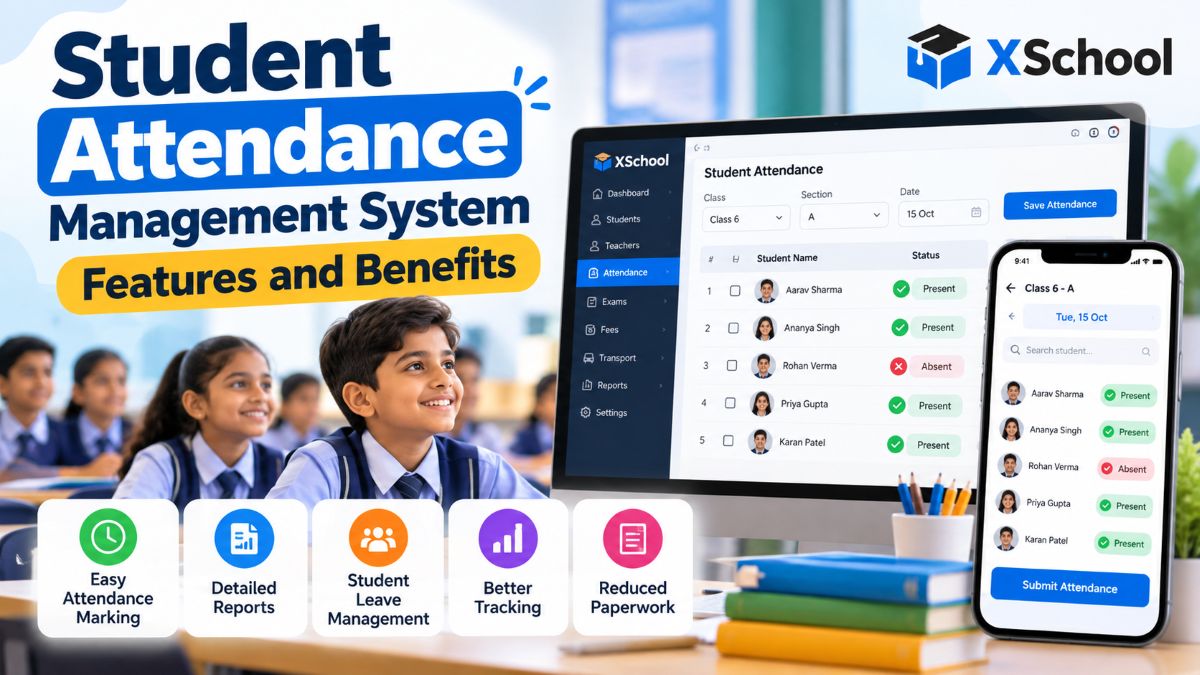
3. Makes Attendance Management Easier
Taking and maintaining attendance is a daily task for schools.
Traditional attendance registers can become difficult to manage, especially when a school has a large number of students and multiple classes.
School management software can simplify the entire attendance process. Teachers or authorized staff can record attendance digitally and administrators can view attendance information whenever required.
Depending on the system, schools can also manage:
- Student attendance
- Staff attendance
- Leave records
- Attendance reports
- Attendance registers
- QR-based attendance
Digital attendance records also make it easier to identify attendance patterns and prepare reports.
4. Simplifies Fee Management
Managing school fees is another area where automation can save a lot of time.
Schools may have different fee types, payment schedules, discounts, concessions, optional fees, and other financial transactions. Maintaining all these records manually can lead to confusion and unnecessary administrative work.
A school fee management system helps schools organize fee structures and maintain student payment records in a centralized system.
Administrators can manage different fee types, student fees, optional fees, relief or concessions, and transaction records.
Having a structured digital record also makes it easier to check payment history and prepare financial reports.
5. Improves Examination and Academic Management
Examinations involve much more than simply entering marks.
Schools need to create examinations, prepare timetables, manage subjects, record marks, assign grades, and prepare results.
A school ERP can bring these activities together in one system.
For example, schools can manage:
- Examination schedules
- Exam timetables
- Student marks
- Grades
- Results
- Online examinations
- Question banks
- Assignments
When academic information is maintained digitally, teachers and administrators can access the required information more quickly and reduce manual calculation and data-entry work.
6. Improves Communication Between School and Parents
Good communication is an important part of a school’s relationship with parents.
Schools regularly need to communicate announcements, notifications, academic information, events, holidays, assignments, and other important updates.
Using school management software, schools can manage communication through digital notifications and announcements instead of relying completely on printed notices or individual messages.
A centralized communication system can help schools share important information more consistently and reduce the possibility of parents missing an important announcement.
Some school ERP platforms can also integrate communication channels such as email or WhatsApp, depending on the available configuration.
7. Makes Teacher and Staff Management More Efficient
Teachers and non-teaching staff are essential to the daily functioning of a school. Managing their information, attendance, leave, permissions, and responsibilities can become challenging as the organization grows.
School management software can provide dedicated tools for managing staff information and administrative activities.
Schools can manage areas such as:
- Teacher records
- Staff records
- Staff roles and permissions
- Staff attendance
- Staff leave
- Leave reports
- Tasks
- Payroll
Having these functions within the same system gives administrators better visibility into staff-related activities.
8. Provides Better Reports and Insights
School administrators often need reports to understand what is happening across different departments.
Creating these reports manually can consume significant time, particularly when information is stored in different registers or spreadsheets.
School ERP software can generate reports from the information already stored in the system.
Schools can use reports for areas such as:
- Student information
- Teacher records
- Staff management
- Attendance
- Examinations
- Fees
- Expenses
- Income
- Financial summaries
Instead of spending hours collecting information from different sources, administrators can access organized data and use it to make better decisions.
9. Helps Manage School Operations from One Platform
One of the most useful benefits of a modern school ERP system is centralization.
Without an integrated system, a school may use separate tools for student records, attendance, fees, examinations, staff management, communication, transportation, and other activities.
This can create duplicate work and make it difficult to maintain consistent information.
A centralized school management system brings multiple functions together.
For example, a school can manage academic activities, student admissions, attendance, examinations, communication, staff management, finance, transportation, certificates, ID cards, and reports from a unified platform.
This creates a more organized workflow for the administration.
10. Saves Time and Supports School Growth
Ultimately, the purpose of technology in school administration is not simply to replace paper with software. The real goal is to make school operations more efficient.
When repetitive work is reduced, information is easier to access, and different departments can work from the same system, school staff can save valuable time.
This becomes particularly important as a school grows.
A system that works for a small number of students may become difficult to manage when the number of students, teachers, classes, and administrative activities increases. A scalable school management system can help schools handle this growth in a more organized way.
Why Schools Are Moving Towards School ERP Software
The way schools manage their operations is changing. Parents expect faster communication, administrators need instant access to information, teachers need convenient tools, and schools need better control over their daily operations.
This is why school management software has become increasingly useful for modern educational institutions.
The right software does not replace the people running a school. Instead, it gives them better tools to perform their work.
From student admission and attendance to examinations, fees, communication, staff management, transportation, and reports, an integrated platform can bring many important school activities together.
Choosing the Right School Management Software
Not every school has the same requirements. Before selecting a school ERP, administrators should consider factors such as:
- Features required by the school
- Ease of use
- Mobile accessibility
- Data security
- Student and staff management
- Attendance and leave management
- Fee management
- Examination management
- Communication features
- Reporting capabilities
- Customer support
- Scalability
- Pricing
It is also a good idea to look for software that can grow with the school instead of choosing a system based only on its current requirements.
Manage Your School with xSchool
Managing a school becomes easier when administrative, academic, financial, and communication activities are connected through a single platform.
xSchool is designed as a school ERP platform to help educational institutions manage their day-to-day operations digitally. From academic management and student admissions to attendance, examinations, fees, staff management, transportation, certificates, communication, and reports, schools can manage multiple activities through one system.
If your school is still depending heavily on registers, spreadsheets, and disconnected tools, moving to a centralized school management software can be an important step toward more efficient school administration.
Visit xSchool to explore how a digital school management system can help simplify your school’s daily operations.
Final Thoughts
School management involves hundreds of small tasks every day. When these tasks are handled manually, even simple activities can consume valuable time.
A good school management system brings structure to these processes. It helps schools organize information, reduce paperwork, improve communication, simplify fee and attendance management, and gain better visibility into their operations.
For schools looking to become more organized and digitally connected, investing in the right school ERP software can be a practical step toward building a more efficient and modern administration.